
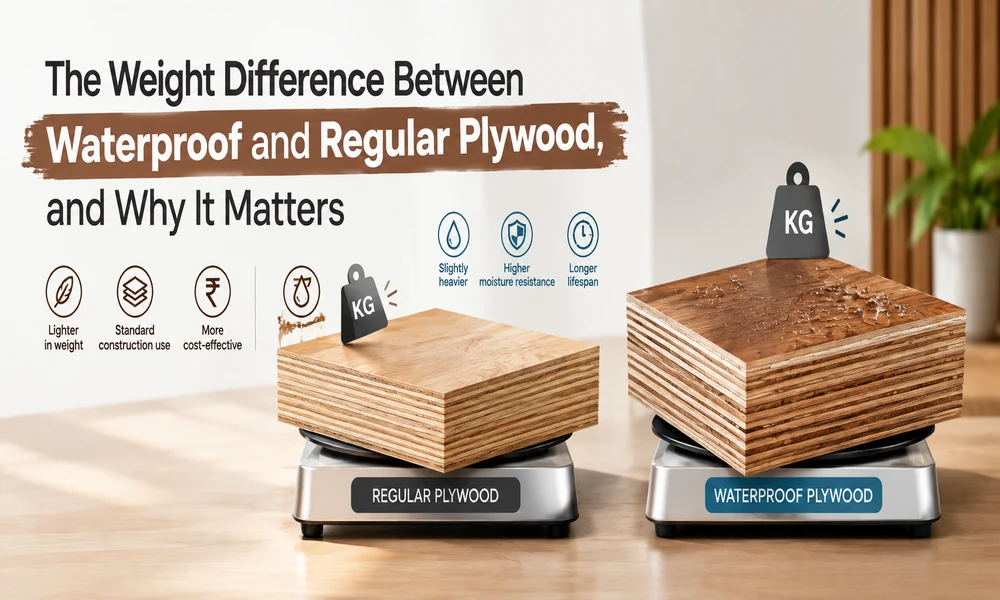
If you have two plywood sheets of the same thickness in hand, you will be able to differentiate between the two based on the weight. One of the sheets may feel heavier, which may lead you to think that the heavier sheet is a stronger option. However, that may not really be the case since several factors contribute to plywood weight,t and the difference in weight needs to be evaluated in the case of waterproof plywood and regular plywood.
Understanding the weight of plywood is important for users as it makes transportation easier along with various other processes like installation or finding the material. However, just knowing the weight won’t confirm the grade or the performance and many other factors need to be assessed along with the weight of the sheet.
Factors Responsible for the Weight Difference in Plywood Sheets
Thickness and type of wood used are two factors responsible for the weight difference between two sheets of plywood. The thicker the sheet, the heavier it will be, while the weight is greater in the case of hardwood veneers compared to softwood. Apart from these two factors, the type of adhesive system being used and the manufacturing process determine the weight difference.
Moisture content is also a factor influencing the weight of plywood. Moisture is absorbed by plywood sheets that are stored in a wet environment. Hence, it needs to be ensured that, when making the weight comparison, it is done under similar conditions.
Is Waterproof Plywood Heavier Than Regular Plywood?
High quality Waterproof plywood could be heavier than typical plywood, but there is no straight rule for weight difference. Benchmarks depend mainly on the wood species, veneer location, core structure, thickness and glueing technology applied by the producer. Waterproof plywood named boiling water-resistant plywood, is made of multiple veneers bonded together with phenolic resin. Its waterproof features come from the glueing technology of the woody layers and not necessarily from the weight only. The source of data provides an average density of plywood depending on species, while another one says it is possible to use phenolic resin for making marine and waterproof plywood,which is heavier than some other glueing methods.
Why Weight is Important for Projects?
Weight is important since it has an influence on handling, transportation and installation. A lot of heavy sheets of material means that it takes more effort to move them on the assembly site. Weight is also important during the production of furnishing goods, as the weight makes panels easy to lift and assemble.
Weight is especially important when working with big elements like furniture, doors and shelves where multiple sheets are used together. The source provides an approximate weight of plywood 4 × 8 ft but emphasizes that it might differ depending on a producer and wood species.
Is Bigger Weight Equal to Higher Quality of Plywood?
A heavier sheet shouldn’t be immediately considered higher in quality. It is true that harder wood can create denser sheets, but the performance of plywood depends on more factors than density of manufacturing. More factors like thickness, veneers, core consistency, bonding and grade influence the performance of plywood.
The author suggests that weight is one of the factors one should check. Heavy plywood is usually considered a good-quality material; however, the author also advises checking the certification, glueing technology, core soundness, evenness of sheets’ layers and the thickness level. That is why weight has supporting value only.
What Aspects to Check Before Buying It?
Check plywood grade and technology used before comparing its weight. If the plywood is used in damp conditions, make sure it is waterproof according to the specifications given by a producer. Check whether there are excessive gaps in the edges.
When choosing plywood for furniture and interiors, pay attention to the thickness needed for doing the job. The source suggests using 12 mm plywood for light shelving and furniture constructions, 18-19 mm for traditional furniture elements and 25 mm for heavy-duty constructions.
Conclusion
To sum up, although there may be some observable difference in weight between waterproof and regular plywood, this is not a good indicator of quality. The factors mentioned above include species, thickness, moisture content, core and glueing technology.
When choosing plywood from a firm like Royale Touche, the buyers should consider more factors than only the weight of the sheet. The grade, certification, construction, bonding technology, thickness and usage purpose of plywood are far more informative than weight.

Comments are closed.