Author

Dale M. Douglas

Browsing

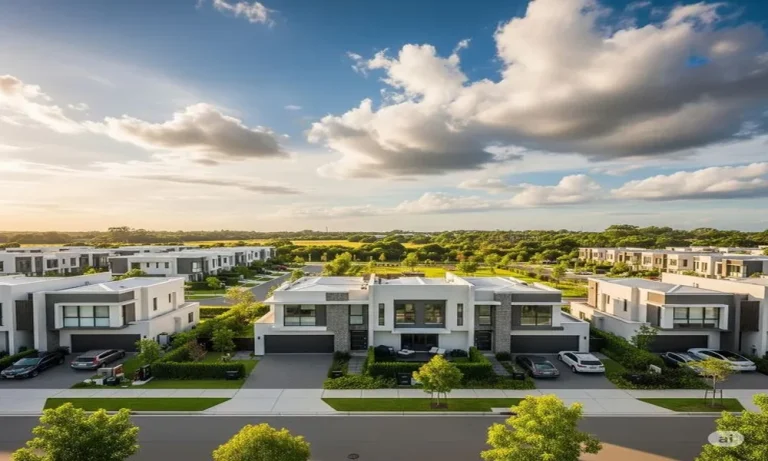
Modern residential architecture is often described through dramatic facades and landscaped pools, but the most useful design features are usually quieter. Efficient layouts, natural ventilation, shading, adaptable rooms, sheltered circulation and accessible common spaces affect daily life long after the launch visuals have been forgotten.

New developments are also being asked to do more with limited land. Architects need to balance density with privacy, greenery, communal areas and climate response. Buyers can learn a lot by looking at the building as a system rather than treating architecture as decoration.

Efficient planning begins inside the unit

A modern apartment should make the stated floor area usable. Straight furniture walls, practical bedroom widths, storage and a kitchen that does not block circulation can improve daily life without increasing the unit size.

When official plans for Dorset Gardens are released, buyers can test whether the city-fringe units use space efficiently. In a higher-value location, wasted corridors or awkward corners are especially costly because every square foot carries a significant purchase price.

Climate response matters in Singapore

Orientation, shading and ventilation affect comfort in a tropical climate. Deep overhangs, balconies, facade screens and thoughtful window placement can reduce direct heat gain while still allowing daylight into the home.

Buyers should study afternoon sun exposure and whether common walkways are sheltered. Air-conditioning can solve heat indoors, but good passive design can reduce discomfort before mechanical cooling is needed and make semi-outdoor spaces more usable.

Landscape can be infrastructure, not decoration

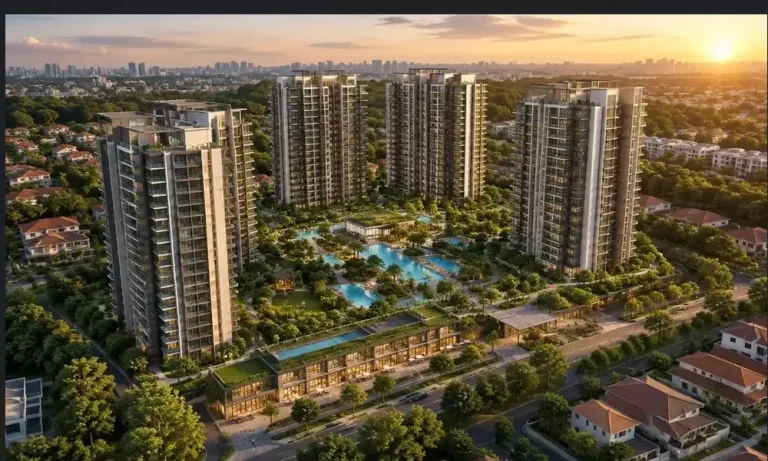
Green areas help soften density, provide shade and create places for children or residents to spend time outside. Planting can also support stormwater management and reduce the hard, reflective surfaces that make large developments feel hotter.

A larger family-oriented project such as Clovelle of Woodlands may have different landscape priorities from a compact city-edge condominium. Buyers should look at how greenery connects entrances, play spaces, pools and walking routes rather than simply counting the number of themed gardens.

Shared spaces need flexible uses

Remote work and changing household patterns have made adaptable common areas more valuable. A function room that can support study, small meetings and family gatherings may be more useful than a highly specialised facility used only occasionally.

The same flexibility matters inside the unit. A small study niche, movable partition or bedroom with workable proportions can help a home adapt as children grow or work arrangements change. Architecture creates value when it reduces the need to move every time life changes.

Accessibility should be visible in the plan

Step-free routes, lift access, clear circulation and usable drop-off points matter to older residents, parents with prams and people recovering from injury. These features may not be exciting at launch, but they widen the number of households that can live comfortably in the development.

Multi-generational buyers should pay particular attention to the path from carpark or arrival point to the unit. A beautiful apartment becomes less practical if daily movement through the estate is difficult for the family members who use it most.

Smart-home features should be easy to maintain

Digital locks, app-based access, energy monitoring and integrated controls can be useful, but technology ages faster than concrete and plumbing. Buyers should ask whether systems use common standards, whether manual operation remains possible and who will support the equipment after the initial warranty period.

The best smart-home feature removes friction without creating dependence on a short-lived platform. A simple, replaceable device may offer more long-term value than an elaborate proprietary system that becomes difficult to repair when the original software or supplier changes. Buyers should favour convenience that remains understandable even after the first owner eventually moves out many years later.

Conclusion

Good modern architecture supports ordinary routines. It manages heat, uses floor area efficiently, provides adaptable spaces and makes movement through the development comfortable for different ages. Those qualities can remain valuable even when design trends change.

Buyers should therefore read architecture through plans and daily use rather than artists’ impressions alone. A development that looks impressive and functions well is more likely to age gracefully, because residents continue to benefit from the design after the novelty of a new launch has passed.

Introduction

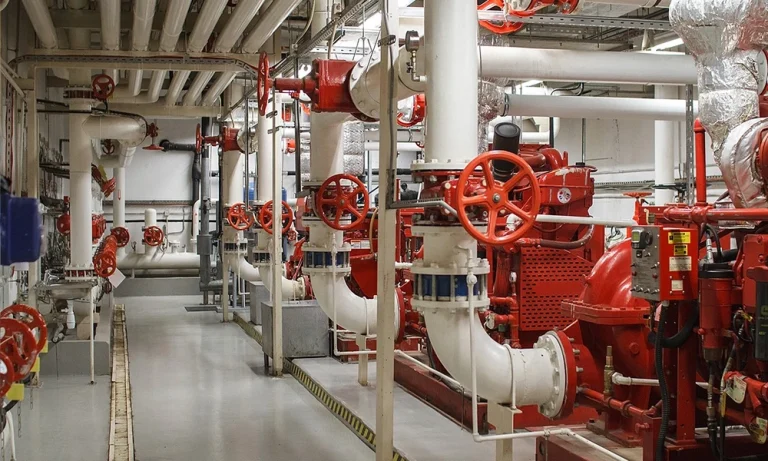
A problem with a fire alarm or sprinkler system, or with another safety system, that suddenly becomes inoperable requires more than a quick fix for a facility. It requires a clear plan to ensure the safety of people and operations during the problem resolution process. By adding emergency fire watch services to a business continuity plan, a business has a viable option to keep monitoring fire during unanticipated events.

For businesses that need to respond quickly when a fire protection system becomes unavailable, having a dependable response strategy is essential. Working with an experienced provider of emergency fire watch Hollywood services can provide trained personnel to maintain continuous monitoring while alarms, sprinklers, or other safety systems are being restored. This temporary coverage helps reduce exposure to fire hazards, supports safer operations, and gives facility managers a structured way to maintain protection until normal systems are fully operational again.

To know what a fire watch is and why it is needed.

Emergency fire watch is normally employed when normal fire protection is temporarily unavailable or when there are unusual activities that increase the fire hazard. Patrols by trained personnel around affected areas to search for fire, and report hazards or emergencies. Fire watch is part of a continuity plan, which means that the business has already planned what it’s going to do if an emergency arises.

Identify Possible Risks

Each location will have different issues, so the first step in continuity planning is to critically assess what could happen. Think of things like a sprinkler leak, fire alarm or power outage, construction, or damage to the fire protection systems. These risks are important for managers to be aware of when deciding when it may be necessary to provide emergency fire watch coverage and what areas of the facility are in need of increased attention.

Have Emergency Contact numbers on hand.

A continuity plan should contain the latest contact details for fire watching companies, facility managers, maintenance staff, emergency services and other key staff members. These are important facts at hand to save precious time in the event of a system failure. It’s also important for businesses to have backup contacts to contact if the initial person or service isn’t available.

Establish Clear Procedures

Staff shall be aware of the actions to take if a fire protection system malfunctions. The plan may include who will report the issue, who will call a fire watch company, what areas should be monitored and how workers will be notified of any temporary safety precautions. Clear, well-written procedures are followed readily in emergencies, rather than complex instructions.

Maintain Reliable Communication

Transmission is particularly critical in the event that normal systems are involved. Fire watch personnel should have communication methods with site management and report hazards. It’s also important for managers to set out how employees, contractors and other residents will receive updates. It is essential that everyone is aware of who is responsible for taking key decisions during the disruption.

Protect Critical Operations

The protection of buildings is not the only purpose for continuity planning. It should also take into account the impact of failure of a fire safety system on day-to-day operations. Hot work may require temporary relocation, access controls to areas, delaying hot work or other operational changes. These can diminish extra risks as the failed system is being fixed.

Record and discuss the Response.

Documentation should be maintained for fire watch activities, incidents, hazards and corrective actions. Once the situation is resolved, management should look back and see what went well and what didn’t. A well-maintained continuity plan will help keep contact details, procedures and responsibilities up-to-date.

Conclusion

Adding emergency fire watch to continuity planning enables businesses to be more confident in their response to unexpected failure of fire protection systems.


When it comes to a house, families have to consider a lot more than just the house. The school’s hours, study time, activities, meals, transportation, and family outings are all examples of how a family’s life in the neighborhood might be influenced. When shopping around for The Serra Residences and Dunearn Green, here are some daily family necessities to take into account how each environment may support the lifestyle they wish to develop.

Start With the Family Schedule

There are a number of schedules that occur at the same time in family life. There can be work hours, school hours and extra-curricular activities to keep up with and get through a week. These routines can be mapped when a purchase is made to determine which components of a site are most important. What works well for one family can be vastly different from another family’s preferences.

First, buyers can start by listing the places that their families visit the most and how these trips can fit in the normal week for The Serra Residences.

Think About School Journeys

Learning can be one of the most frequent reasons for families to travel. The family plan schedule can include school drop-off, picking up, enrichment classes, and more. The best place is thus one that functions with the family’s actual needs and isn’t just “convenient” on a map.

Researchers at Dunearn Green could think about the various education journeys that their household might take and how they might relate to education, shopping or daily activities.

Create Space for Study

The home is a component of family-friendly living. Areas for homework/reading/online learning/creative projects may be required. An individualized study room may be helpful, and other flexible areas may facilitate these activities. What is key is whether there is sufficient space to be able to work without disrupting the rest of the family.

For The Serra Residences, the buyers can ponder the location they can have for their children to conduct their studies in a comfortable space while the parents work, cook and spend their time together in some of the common areas.

Consider After-School Activities

There are no school days only. Additional journeys for parents and children can be made in sports, music, arts, tutoring, clubs and other activities. These pledges can impact how the family travels and their choices of transportation.

When looking at Dunearn Green, people should think about how additional school or work activities may affect the broader community and family’s existing school and work schedules.

Look at Family Dining

Focusing on meals can be a way for families to spend time together while gaining great benefit. While eating out dinners may be a matter of convenience for weekday meals, perhaps you can extend the duration of dinners on weekends. Then it is possible to have access to healthy food and eating options, which can then be integrated into family habits.

Eagerly awaiting residents of The Serra Residences will be dining opportunities that accommodate the fast-paced needs of the day and the leisurely family outing.

Include Recreation and Outdoor Time

Opportunities for children and adults to engage in outdoor experiences can be beneficial to both. Other outdoor activities such as parks, walks, recreational facilities, etc., can offer opportunities for physical activity and family enjoyment. With the right destinations, you don’t always have to plan a whole lot for activities on the weekend.

The wider context of Bukit Timah can be investigated in this context, with the following recreation preferences in mind.

Consider Parents’ Needs Too

A place that suits the needs and interests of adults should be suitable for the family. Some parents might require easy modes of transportation, medical care, shopping, eating, exercise facilities and the occasional chance to unwind. Having all these in balance can help make the household routine easier.

With The Serra Residences, buyers can evaluate and consider the needs of the family as well as their own professional and personal aims and not only their kids’ needs.

Plan for Changing Family Needs

It’s a natural thing for family patterns to change. As children grow, school arrangements change, activities grow, and parents may have varying work patterns throughout their lives. A loving, adaptable home and an integrated neighborhood can be useful in these changes.

The family lens can be used to assess both The Serra Residences and Dunearn Green in the longer term. Purchasers can gain a fuller picture of the potential of each environment to promote family life by taking into account school journeys, study areas, extra-curricular activities, meals, activities and play, transport and parents’ needs.

The best family home is one that fits into the family’s actual time frame and can accommodate possible future adjustments. The following key considerations can be applied when evaluating The Serra Residences and Dunearn Green from a practical standpoint, to help families establish a more concrete list of the routines, priorities and experiences they cherish most.

It can be difficult to keep track of several Executive Condominium developments. Each project has some good points, each neighborhood has some good points, and each visit provides more information to remember. Buyers may feel overwhelmed after a while and feel like they are ‘over-thinking’ their purchase. The more information they have, the more uncertain they are about the decision.

The answer is not to go to less developed areas. It is to make comparisons on a consistent and simple basis. By taking a step-by-step approach, buyers can concentrate more on the important aspects of the purchase and not have to remember all the details from all the visits.

Decide on Your Comparison Criteria

Prior to visiting another development, decide on a few factors that are most important to you. These may be based on access, local amenities, local convenience, commuter facilities and lifestyle.

If the same parameters are applied to all comparisons, then the comparisons will be fair. It also ensures that one good feature doesn’t beguile the eye when there are other elements of the design that are more significant in the long term. When the comparisons are made, they are better if they are consistent.

Look Beyond the Property Boundaries

An Executive Condominium is just one aspect of living. Your daily life in the surrounding neighborhood is just as important as part of your search and should be taken into account.

However, many purchasers check out Bukit Panjang when they are considering buying a Solano Grand, as they take the time to do a bit of walking around. They learn about the area by visiting some of the transport points, local shops and community areas near them to give them an idea of how the area works during a normal day. When making your home feel pleasant, a neighborhood that feels comfortable can have just as much of an impact as the home itself.

Keep Every Visit Organized

With each property visit, record your observations as soon as possible after your visit to help keep them fresh. Write out the details and your thoughts on the experience; include practical details and opinions in the same format repeatedly.

Later comparisons are much simpler with simple categories like location, accessibility, environment and convenience. Organized notes will help to not have to memorize the content, particularly following several visits to the developments. Confident decisions are made with clarity of records.

Compare With Your Future Lifestyle

As things change, a property should keep changing to meet your needs. Focusing only on the here and now may lead you to ignore things that you may need to take into account in the future.

When looking into Wynwood Grand, buyers should also learn how the community of Woodlands could accommodate future work, family and lifestyle arrangements, changes in routine and more. In forecasting, the buyer can make better appraisals of developments. Flexibility in location can be more beneficial with the passage of time.

Avoid Trying to Find Perfection

All Executive Condominiums have their own pros and cons. Spending time waiting for something that suits all the potential preferences might only take more time, but no better.

Rather, concentrate on determining the home that best fits your needs. It’s not always possible to find perfection, but a balanced decision is more realistic. Ideally, the one that suits your lifestyle is the best, not the one that has the longest list of features.

Conclusion

By keeping your top needs and real-life facts in clear view, weighing executive condo options does not have to feel scary. Folks who plan for future steps while grading different local sectors are much better prepared to choose well. Solano Grand proves that studying a specific block is a key part of your initial work, while Wynwood Grand points out that checking a long-range lifestyle fit is crucial during property reviews. A clean, simple plan turns a tough search into a very safe win.