Archive

February 2022

Browsing

Be it granite, quartz, or marble, New York’s buildings and homes use stones in various forms, from esthetics to functional. But, when the white, chalky material known as efflorescence appears on your recently poured surface, it may be highly frustrating. Fortunately, professionals in stone cleaning Mahopac NY can help you with efflorescence removal from stonework in the future.

What is Efflorescence?

The white material generated by naturally occurring salts in gravel, soil, cement, water, and sand is known as efflorescence. These salts can then migrate through the water to the surface of your natural stone, leaving crystalline deposits behind. Although this chalky material is not dangerous, it will detract from the beauty of your natural stonework by generating chalky white areas. This will require professional help in the form of stone cleaning Mahopac NY

How to Avoid Efflorescence?

The likelihood and intensity of efflorescence can be reduced by an array of installation procedures, including:

  • Keeping stone dry and off the ground by storing it on pallets.
  • Ensure correct grading and drainage to avoid standing water on the stone.
  • Damp proofing beneath and behind installations, primarily when porous materials such as Indiana Limestone are used.
  • At the end of each day, cover unfinished walls to avoid dampness behind the stone.
  • It’s also worth mentioning that less porous stones absorb less water and may be less prone to efflorescence.

Treatment of Efflorescence on Concrete and Masonry Surfaces

The following variations lie in treating efflorescence:

  • Material Choice 
  • Design and Details
  • Construction Methods
  • Material Choice 

Avoid selecting materials that are likely to effloresce. The possibility of efflorescence development increases with alkali content, so use cement with a low alkali content. Additionally, use potable water and cleaned sand when making grout or mortar mixes. The possibility of efflorescence production also increases if building trimmings such as copping, sills, and guards are made of low-salt content materials. Lastly, it is possible to determine whether a material will likely form efflorescence in the future

  • Design and Details 

Every brick wall may be infiltrated in some way by rainwater. It is still possible to minimize or eliminate water penetration that might cause efflorescence by carefully designing and detailing. 

The following design measures are advised to avoid efflorescence formation: 

Groundwater that is below grade can contain soluble salts, which can accumulate in brickwork and cause efflorescence. It is possible to eliminate this cause of efflorescence by installing waterproof masonry below grade and a foundation flashing above grade. The base flashing below the air space should be supported by grout or mortar.

Trim flashing: The purpose of flashing is to prevent capillary action and prevent moisture from entering masonry and trim materials.

Masonry walls do not produce efflorescence since they have an air space between their outside and inner walls. A brick wythe with an air gap separates the brick wythe from the surrounding materials, allows water to flow down the back of the brick wythe, and prevents salts from moving from the backing materials.

  • Construction Practices 

The following are some beneficial building approaches that contribute to less efflorescence formation: 

  • Water Consumption: Use water that is devoid of salts. 
  • It is important to keep masonry units clean and free from dirt, pollution, groundwater, snow, and rainwater during transit and construction.
  • Efflorescence can only be minimized by a solid wall’s head and bed mortar joints, and by using grapevine mortar joints on its outer face. Providing an appropriate connection between the masonry sections will prevent wind-driven water from entering.


Beautifying your home can be a little stressful and frustrating if you do not know how you should do it. You might have tried checking out the latest trends and watched a couple of lifestyle or interior decorating videos but are still clueless about what you should do for your home. Here is a quick tip for you–artificial turf

Synthetic grass is more commonly used outdoors, but most people do not know that it can be used indoors as well. Its durability, aesthetic, and cost-saving features are just some things that make it marketable. And over the decades, artificial turf Melbourne has been helping enhance the look of many homes.

If you are still unconvinced about using synthetic turf indoors, you may start by installing it on your terrace or gazebo. These spaces are most likely the area where you and your loved ones spend time to bond and catch up. Creating a park-like ambiance in these areas can contribute to bringing you a relaxing time with your loved ones.

Aside from the two, you can also install artificial turf on your balcony. Just like natural grass, synthetic turf can also enhance the look of your balcony and give it a tranquil and inviting feel for your guests.

If you are still wondering how you can use artificial grass indoors, you can try using it for a wall covering. The aesthetic of the grass wall can elicit a relaxing and calming effect for anyone who can see it. You can also hang some plants or other ornamental accessories on this wall without worrying about pests being attracted to it as synthetic grass are not prone to this.

There are more ways how you can use artificial grass to beautify your home, and these are just some of them. But if you want to know more about these artificial grass decorating ideas, you can check this infographic created by Easy Turf. 

Ideas-on-How-To-Decorate-With-Artificial-Grass

The world has become increasingly conscious of environmental, social, and governance (ESG) factors. Companies now realize that integrating ESG principles into their business practices is no longer optional but necessary. This is where ESG advisory services come in.

In this article, we will take a deep dive into the reasons why every company needs these services and the benefits they can bring.

What are ESG advisory services?

ESG advisory services help companies integrate ESG factors into their business operations. They identify ESG risks and opportunities, develop ESG strategies, and monitor performance. Services cover environmental management, social responsibility, and corporate governance. They can be tailored to meet the specific needs of a company, whether it’s a large corporation or a small start-up. Working with such services ensures a holistic approach to ESG issues rather than just focusing on one area.

Why do companies need these services?

Meeting Stakeholder Expectations

Today’s consumers and investors are more socially and environmentally aware than ever before, and they expect companies to be responsible and sustainable. By integrating ESG principles into their business practices, companies can meet these expectations and enhance their reputation as responsible and ethical organizations.

Enhancing Business Performance

Companies that integrate ESG principles into their business practices can benefit from improved business performance. This includes increased profitability, enhanced stakeholder relationships, and better risk management. These services can help companies identify ESG-related opportunities that can help drive business performance.

Staying Competitive

Companies that integrate ESG principles into their business practices are better able to adapt to changing market conditions and stakeholder expectations. Advisory services can help companies develop strategies that not only protect the environment and society but also enhance business performance. By working with these services, companies can stay competitive and ensure they are keeping pace with industry trends.

Improved Risk Management

These services help companies identify and manage ESG risks, reducing the likelihood of negative impacts on the company’s bottom line. By integrating ESG principles into their business practices, companies can also reduce their exposure to regulatory risks, reputational risks, and operational risks. They help companies to develop strategies to mitigate risks. By proactively managing risks, companies can avoid negative impacts on their reputation, finances, and stakeholders.

Enhanced Reputation

By demonstrating a commitment to sustainable business practices, companies can enhance their reputation as responsible and ethical organizations. These services can help companies communicate their sustainability efforts to stakeholders and ensure that they are aligned with their values. This can lead to improved stakeholder relationships, increased customer loyalty, a positive reputation, and better access to capital.

Increased Profitability

ESG advisory services can help companies identify ESG-related opportunities that can help drive business performance. These opportunities can include cost savings through improved resource efficiency, increased sales through differentiated products and services, and better access to capital through improved ESG performance. By integrating ESG principles into their business practices, companies can create a more resilient and profitable business model.

Improved Stakeholder Relationships

By integrating ESG principles into their business practices, companies can build stronger relationships with stakeholders, including customers, employees, investors, and regulators. This can lead to increased loyalty, improved retention rates, and better access to capital. Companies can better understand their expectations and concerns by working with stakeholders and tailoring their sustainability strategies accordingly.

As the world becomes increasingly focused on ESG factors, companies that fail to integrate ESG principles into their business practices risk falling behind. ESG advisory services can help companies identify ESG risks and opportunities, develop ESG strategies, and monitor their ESG performance. By working with these services, companies can improve risk management, enhance their reputation, increase access to capital, and drive business performance. In today’s business landscape, ESG is no longer just a “nice to have” but a critical component of long-term success. Companies can stay ahead of the curve by working with these services and positioning themselves for a sustainable future.

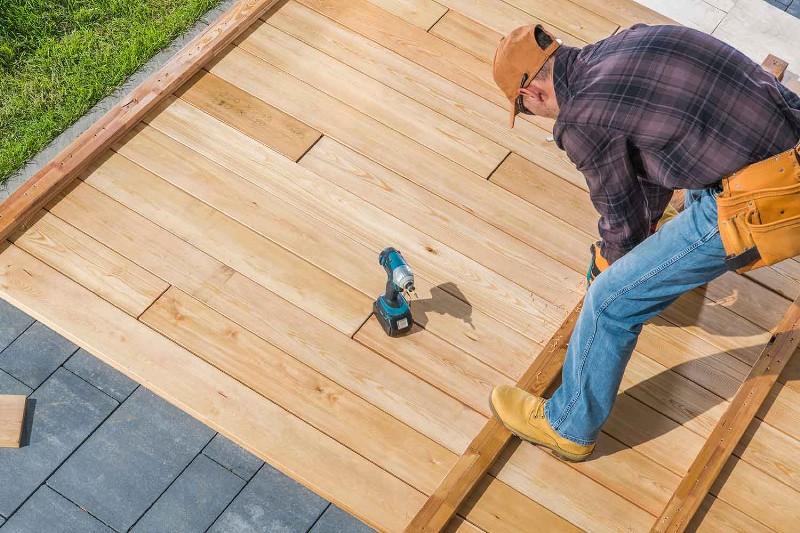
To help you choose, do not hesitate to ask for several quotes. You will be able to compare the services and prices offered by a digger and by a specialized company and select the one that corresponds to the budget set for your wooden deck project, composite deck, tiled deck, etc. Deck Builder Decksforlife is the right option there.

Word Of Mouth

For your patio work as for other home work projects, word of mouth continues to be an essential solution for finding the best professional. Within your family, your relatives or even neighbors who have already built their deck, do not hesitate to find out about the skills and reliability of the craftsmen they have themselves called upon.

The Web: A Valuable Source of Information for Building a Deck

Thanks to the Internet, you have the possibility of having exhaustive and complementary information on the various professionals capable of building your deck in wood, in tiles, in composite wood boards, etc. If the professional has a website, consult his services, his previous development and renovation work, as well as the products and skills put forward. Specialized sites, social networks, as well as free online directories are also valuable information guides for finding the best professional. In this area, professionals stand out from the competition with:

  • Putting you in contact with businesses and craftsmen in your region
  • Online simulators to estimate the price of a composite, tile, stone or wood deck, as well as the cost of labor.
  • Once you get in touch with professionals, you get an accurate quote for your deck construction project. From the choice of materials to the type of deck (on pedestals, stilts, single-storey, etc.), many technical aspects are reviewed by these specialists.

How to Compare the Services of Professionals?

In order to choose the best professional for the construction of your deck (in wood, stone, tiles, etc.), it is important to take into account several criteria. Beyond the price proposed on estimate for the service carried out, you will have to take into account:

  • Availability, and the duration of intervention for the implementation of the work and the installation of the deck;
  • The human and material resources available: number of workers dedicated to the construction project, construction machinery, etc.
  • Possible subcontracting with craftsmen and companies depending on the type of project, development or renovation.

Also pay attention to the responsiveness and quality of the answers provided for any question, whether practical or price-related. Regional or national certification and a label can also be a guarantee of professionalism and quality.

Services, Decks And Materials: What Are The Price Estimates?

To better identify the price of a deck (composite slatted deck, solid wood deck, tiled deck, natural stone deck, etc.), it is important to take into account several prices:

  • The hourly cost of labor: 60 to 85 dollars
  • The price of earthworks: 30 to 65 dollars per m²
  • The price of rockfill work: 90 to 250 dollars per m²
  • The cost of leveling: 7 to 10 dollars per m 3
  • The price for the realization of a trench: 8 to 12 dollars per linear meter
  • The price for the realization of a floor covering for deck (earth or sand): 15 to 45 dollars per m 3.

Concretely, it is necessary to count between 400 and 700 dollars per day to benefit from the services of a navy for the installation of a wooden deck, composite deck or tiled deck.